
What a Times Square Buy Is Really For
Times Square is not a substitute for a full New York media plan. It is a concentrated brand moment in one of the world's most recognizable public environments. Brands buy it when the campaign needs to look consequential, launch with visibility, create content people want to photograph, or give a product, artist, event, partnership, or announcement a public stage.
That makes the buying question different from a standard roadside billboard decision. A highway board is usually evaluated by corridor reach, direction of travel, and local frequency. A Times Square screen also needs to be evaluated through cultural visibility: who will see it in person, who will film it, what the image communicates when shared, and whether the brand has a reason to turn the placement into a larger story.
A strong campaign may use Times Square as the hero and pair it with targeted New York media that handles repetition and action. A weak campaign treats a famous location as the whole strategy. Start by deciding which of those two roles the placement must play.
When Times Square Is the Right Investment
| Campaign Objective | Times Square Role | What Must Be Planned |
|---|---|---|
| Major product or brand launch | Public reveal and launch content | Press, creator capture, landing page, partner amplification |
| Entertainment release or live event | Date-driven visibility and fan moment | Timing, venue or ticket action, short clear message |
| National brand refresh | High-profile proof of the new identity | Hero creative that photographs cleanly and scales across channels |
| Technology, finance, or B2B milestone | Credibility signal for customers, partners, or talent | Reason for the moment, supporting announcement, targeted follow-up |
| Tourism or destination marketing | Inspiration and broad visitor awareness | Strong visual destination cue and simple next action |
| Local store traffic only | Usually a supporting tactic, not the core buy | Additional neighborhood media closer to the store or service area |
Choose the Screen by Viewing Environment
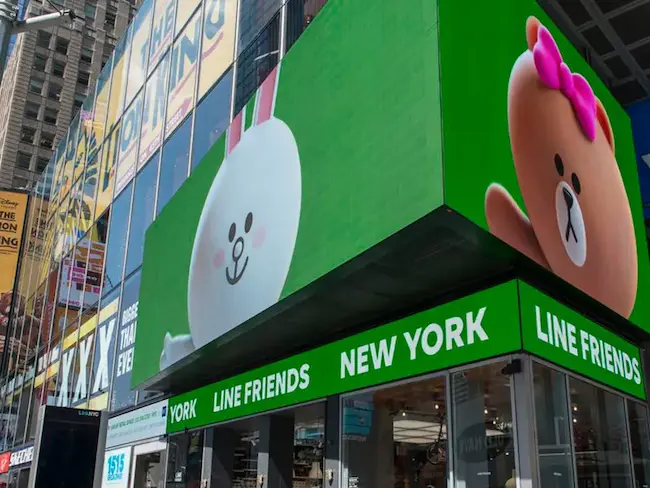
Not every Times Square screen solves the same problem. Some are seen primarily by pedestrians who have time to look up, wait, and photograph. Others are experienced in passing traffic, from a particular plaza, or as part of a dense wall of digital media. Screen size matters, but the exact line of sight and surrounding context often matter more.
Ask for current photography or video from the expected viewing approaches, the display orientation, hours of operation, spot length, loop length or share of voice, and every production specification. Then ask a practical question: where does a person stand, walk, or arrive when this message is most visible? A screen that looks dominant in a proposal can be less useful if the main audience sees it only at an awkward angle or from too far away.
For a broader view of evaluating placement, BM Outdoor's billboard location guide explains the importance of approach, visibility, audience fit, and decision proximity. The same principles apply in Times Square, even though the audience is more pedestrian and the media environment is more visually intense.
Build Creative for a Crowded Visual Field
Times Square rewards a clear visual decision. A creative file competes with multiple moving screens, signage, buildings, crowds, and cameras. The work needs a distinctive image or motion cue, a recognizable brand, and a message that can be understood in a single glance. If the campaign needs a longer explanation, carry that explanation in the landing page, press activity, social content, or an on-the-ground activation.
| Creative Element | Why It Matters | Practical Rule |
|---|---|---|
| Brand cue | People may see the screen for only a moment or through a camera | Make the brand visible without needing to read supporting copy |
| Hero visual | Surrounding screens compete for attention | Use one visual focal point, not a collage of products and claims |
| Motion | Movement can attract attention but can also become noise | Use deliberate transitions; every paused frame should still work |
| Copy | Small text disappears in a fast visual environment | Use one headline, one date or cue, and one action at most |
| Photo value | Campaign imagery may travel through social and media coverage | Test whether the execution is recognizable in a vertical phone capture |
Production should start from the operator's technical specifications, not from a generic social or television cut. Confirm pixel dimensions, file format, frame rate, motion restrictions, delivery deadlines, and approval process before final creative is locked. The billboard design guide provides the core readability discipline behind these choices.
Turn the Placement Into a Campaign Moment
The media unit is only one part of the result. The most effective Times Square campaigns have a capture plan. That can include a scheduled press or creator visit, a photographer, partner content, a launch landing page, a short social sequence, community or fan participation, and a clear way for people who see a post to learn more. Without that preparation, a high-profile screen can become a costly image with no defined next step.
Build a launch calendar that separates creative delivery from public activation. Allow time for screen approval, testing, production changes, any on-site capture, stakeholder coordination, and the release of supporting content. If the campaign is tied to a product launch or event, the screen schedule should reinforce the moment when interest is highest, not simply run because inventory was available.
- Before launch: establish the landing page, tracking, media capture plan, and approved message hierarchy.
- During the screen run: document the execution, monitor delivery, and publish supporting content while the moment is current.
- After launch: reuse the captured footage in sales, social, press, partner, and recruitment activity where appropriate.
Compare the Full Cost of the Decision
A Times Square proposal should separate the media buy from creative adaptation, trafficking, production, installation where applicable, capture, activation, and any campaign support around the moment. The cheapest line item is not always the most efficient choice if it leaves no budget to make the placement visible beyond the screen itself.
Rates depend on the specific screen, dates, share of voice, campaign duration, demand, and creative requirements. Use BM Outdoor's billboard cost guide for the variables behind a media quote, then compare current Times Square options against the actual job the campaign needs to do.
Measure Impact Beyond the Display
Proof of play or display delivery is necessary, but it is not the full campaign outcome. Set success measures before launch. A brand moment can track press mentions, creator coverage, social engagement, branded search, direct traffic, campaign page visits, and partner response. A ticketing or product launch can add sales, registrations, pre-orders, or app activity. A B2B milestone can track event attendance, qualified visits, recruitment interest, or outreach response.
Separate the results from the screen itself from the results of the supporting activation. This makes the next investment decision much clearer. BM Outdoor's OOH ROI measurement guide can help connect the media objective to a practical scorecard.
Use Times Square Within a New York Plan
Times Square can be the headline placement, while a broader New York advertising plan supplies commuter repetition, neighborhood presence, and local action near stores, venues, or offices. That combination gives a campaign both a public moment and enough market coverage to keep the message working after the first photo is posted.
Bring the campaign objective, audience, launch date, markets, creative assets, activation plan, and measurement requirements to the planning discussion. BM Outdoor can compare available Times Square options and the supporting New York media that gives the moment a longer life. Request a Times Square billboard advertising quote to review current campaign options.
Frequently Asked Questions
Times Square billboard advertising uses digital displays and high-visibility out-of-home placements in and around the Times Square area. It is commonly used for launches, entertainment, retail, technology, tourism, financial services, and campaigns that benefit from cultural visibility and shareable content.
No, but it is most effective when the campaign has a reason to create a highly visible moment. A regional or emerging brand can use Times Square when the objective includes press, partner visibility, investor attention, a major launch, or content amplification beyond the local audience.
Compare the exact location, orientation, sightline, pedestrian versus vehicle viewing, nearby landmarks, screen size, hours, loop or share of voice, creative specifications, and how the screen fits the audience journey. A well-known address alone is not enough to choose the right unit.
Creative needs one strong visual idea, immediate brand recognition, large readable type, and an execution that remains clear among many surrounding screens. Motion should support the idea rather than replace it, and every frame should work when photographed or viewed briefly.
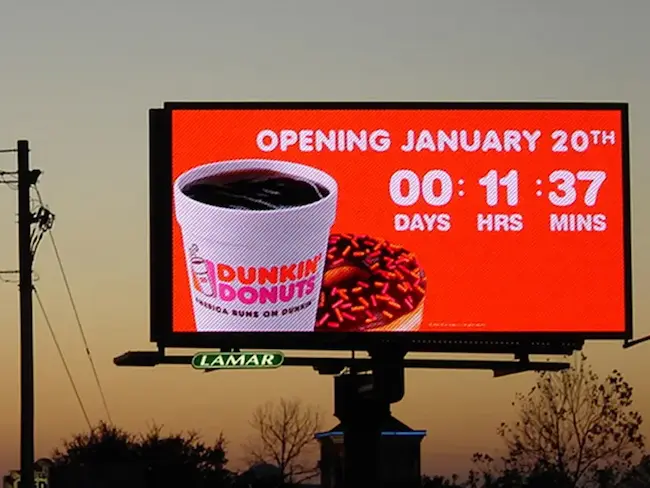
Depending on the screen, operator, creative approval, and campaign setup, a plan may support scheduled creative changes, countdowns, event messaging, or social amplification. Confirm all trafficking, technical, and approval requirements before promising a live execution.
Measurement can include delivery reporting, on-site content capture, press and creator coverage, branded search, direct traffic, campaign landing-page visits, social engagement, partner activity, and business outcomes tied to the launch or event.
Times Square can create a concentrated hero moment, while other New York media can add commuter frequency, neighborhood reach, and local action. The best mix depends on whether the main goal is visibility, market coverage, conversion, or all three.
Ready to advertise outdoors?
BM Outdoor plans, buys and prints OOH campaigns across all 50 states. Request a free quote with no commitment.







Comments
Be the first to comment.