
Start With the Launch Job, Not the Format
A product launch billboard campaign should make a new offer easier to notice, understand, and act on in the markets where it is actually available. That may mean a public reveal in one high-visibility location, repeated awareness around retail corridors, commuter frequency for a subscription service, or local relevance around an event or demonstration. The media format follows that job.
A common planning error is to choose a large board first and ask what it will achieve afterward. A better brief names the product, priority audience, availability date, markets, conversion path, creative assets, launch partners, and success measures. With that information, a media plan can distinguish between a hero placement that creates attention and the supporting placements that turn attention into useful market coverage.
Map OOH to the Launch Calendar
| Launch Phase | OOH Job | Message Focus | Useful Measures |
|---|---|---|---|
| Pre-launch | Build recognition and anticipation in priority markets | Brand, category tension, reveal date, early access | Branded search, waitlist activity, landing-page visits |
| Reveal week | Create a clear public announcement | Product name, hero benefit, availability or event cue | Reach delivery, earned coverage, creator capture, direct traffic |
| Availability | Connect awareness to a practical action | Where to buy, try, download, book, or learn more | Store visits, site activity, registrations, retailer response |
| Proof period | Reinforce credibility and differentiation | Use case, review quote, product proof, partner signal | Sales trend, qualified leads, repeat site visits |
| Expansion | Support new markets or a second audience segment | Localized availability and relevant benefit | Market-by-market lift and cost efficiency |
Not every launch uses every phase. A limited release may focus on reveal and availability. A new service category may need more pre-launch education. The point is that the media calendar should track real customer readiness. A strong screen running before a product can be purchased can still be useful, but it should be measured as awareness rather than expected to produce immediate sales.
Plan the Right Market Footprint
Use the product rollout to define geography. For a retail launch, start around participating stores, high-traffic routes into those trade areas, nearby office districts, or competitor shopping zones. For a consumer technology or app launch, consider commuter routes, neighborhoods with the target demographic, airports, transit, and entertainment districts. For B2B or high-consideration products, prioritize the metros where customers, partners, industry events, or sales teams are concentrated.
National reach is not automatically better. A focused plan can create more visible local pressure when inventory, retail support, sales coverage, and the product experience are strongest in a few markets. A broader plan becomes useful when distribution is broad enough to support it and the campaign needs a consistent national signal.
| Launch Situation | Placement Logic | Recommended OOH Mix | Action Path |
|---|---|---|---|
| Retail product debut | Routes into participating stores and shopping destinations | Bulletins, digital bulletins, retail-area media | Store locator or retailer availability |
| New restaurant or consumer service | Meal-time, commute, and neighborhood decision routes | Digital billboards, transit, close-in formats | Visit, order, reservation, app download |
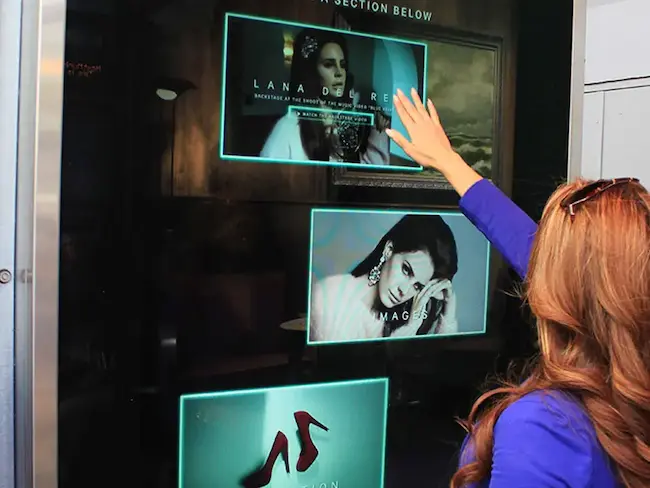
| Consumer tech release | High-attention commuter and cultural environments | Digital OOH plus selected hero displays | Launch page, pre-order, demonstration |
| B2B platform launch | Priority business districts, event cities, airport approaches | Airport, digital OOH, commuter media | Demo, event visit, sales contact |
| Regional expansion | New service areas where awareness is low but supply is ready | Highway, transit, local digital screens | Check availability, quote, sign-up |
For market options in priority metros, review BM Outdoor's New York advertising inventory, Los Angeles billboards, Houston billboards, and Miami billboards. Availability, exact placement, and production rules must be confirmed against the live launch window.
Assign a Clear Role to Each Format
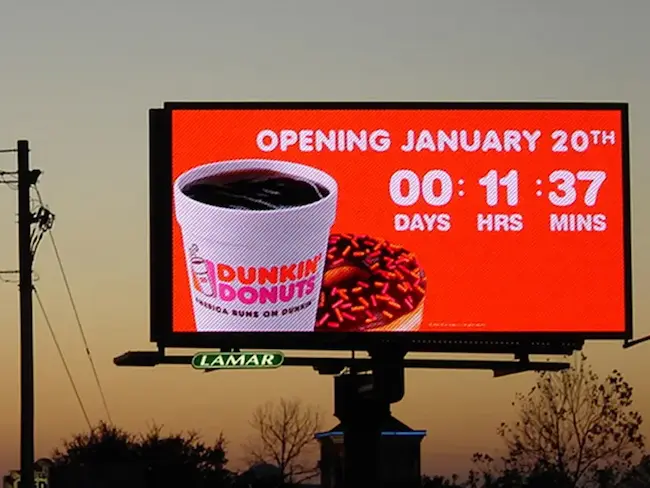
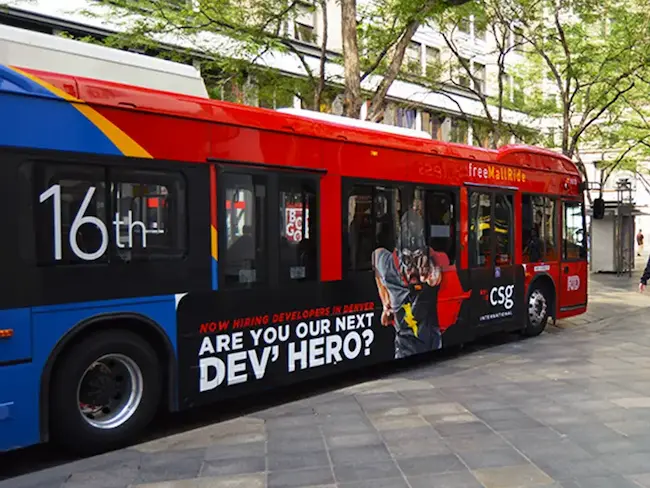
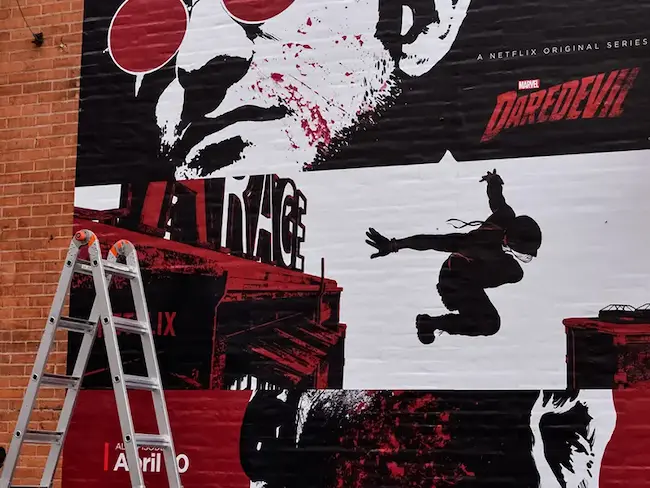
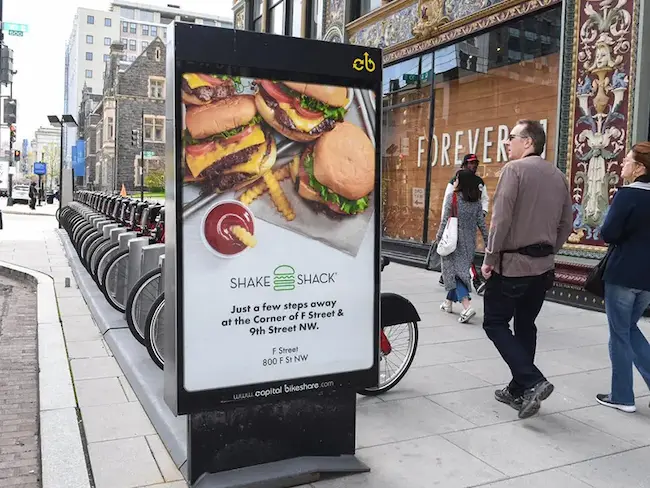
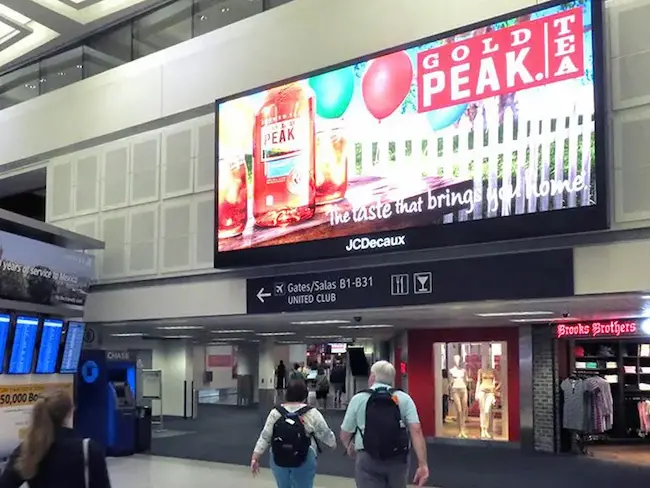
A launch plan often needs more than one kind of visibility. Large static bulletins can give a product repeated, unmistakable recognition along major corridors. Digital billboards can update launch dates, availability messages, and market-specific creative without a physical posting change. Transit can deliver frequency along daily routines. Airport and other place-based environments can align a brand with business travel, tourism, or a specific decision context.
The decision is not static versus digital as a matter of taste. It is whether the message must change, whether the audience needs repeated exposure, how close the media should be to action, and how the launch is expected to evolve. BM Outdoor's digital versus static billboard guide explains the operating tradeoffs in more detail. A product launch can use static media for a durable signature and digital inventory for tactical updates, provided each has a defined role.
Make the Creative Work at Real Viewing Speed
Launch creative should communicate a product idea before the viewer has time to read a product description. In most cases, that means a recognizable brand cue, one product image or visual device, one benefit or reveal, and one optional action. A product name without a category cue can be memorable but unclear. A long list of features can be accurate but unreadable. The right balance depends on how familiar the category is and whether the launch has other channels explaining the detail.
- Use one message hierarchy: brand first, product or benefit second, action only when it earns its space.
- Build for the actual format: a highway bulletin, transit shelter, and landmark screen require different scale and pacing.
- Test the short view: review the execution at distance and on a moving phone video, not only at full size on a monitor.
- Coordinate the destination: the URL, QR code, store locator, app listing, or sales path must be ready before the media begins.
For more on simplicity, legibility, and creative adaptation, use the billboard design best-practices guide. Strong launch creative looks simple because the team made difficult prioritization decisions before it reached the board.
Buy Enough Time for a Real Launch
Media lead time is part of the launch plan. Teams need time to compare locations, reserve inventory, review production requirements, adapt creative, submit files, receive approvals, coordinate the landing experience, and prepare reporting. High-demand periods, major markets, premium displays, and date-specific launches can reduce flexibility quickly.
Ask for a decision calendar that shows inventory hold dates, creative due dates, proofing or approval milestones, live dates, and contingency options. It should also identify what can change after the campaign starts. A digital unit may permit scheduled rotation or updated creative under defined rules; a static placement will have different production and posting considerations. Planning this early prevents a campaign from choosing formats that cannot support its actual launch date.
Scope the Investment Beyond Media Price
Product launch OOH pricing varies by market, location, format, share of voice, campaign length, seasonality, and current availability. A decision-ready budget should also account for artwork adaptation, production where relevant, trafficking, campaign capture, landing-page readiness, analytics, and the digital or retail support that receives the response. Do not treat the media line alone as the full launch investment.
For pricing variables and a starting point for comparing quotes, see BM Outdoor's guide to billboard advertising costs. For a launch, the key question is not only what a placement costs; it is what job it performs in the complete market plan.
Measure What the Launch Needs to Prove
Proof of display confirms that the media ran. It does not by itself prove whether the launch improved awareness, intent, or commercial results. Define a scorecard before the creative goes live and separate the metrics that matter at each phase. A reveal may emphasize delivery, media capture, direct traffic, and branded search. An availability phase may emphasize retail traffic, product-page visits, sales leads, app installs, or registrations.
Use unique landing pages or market-aware URLs where appropriate, keep paid search and social activity aligned with the OOH calendar, and compare response by launch market. This gives the team a credible basis for deciding whether to extend the campaign, shift geography, update the message, or use the next phase of the budget differently. BM Outdoor's OOH ROI measurement guide outlines how to connect a media objective to business outcomes.
Request a Product Launch OOH Plan
Bring the product category, launch date, priority markets, availability footprint, audience, campaign objective, creative status, and action path to the planning discussion. BM Outdoor can identify current options across billboards, digital OOH, transit, and place-based media, then structure a plan around the launch phases that matter to the business. Request a product launch OOH quote to review inventory and build a campaign around your rollout.
Frequently Asked Questions
Product launch OOH advertising uses billboards, digital screens, transit media, and other out-of-home formats to introduce a new product in the places the target audience travels, shops, works, and spends time. It can create a launch moment, build local availability awareness, and support a campaign running across paid, owned, retail, and social channels.
Begin planning before the public launch date so the team can secure suitable inventory, adapt creative to the selected formats, complete approvals, and coordinate the OOH run with retail availability, a landing page, public relations, and digital media. The exact lead time varies by market and format, so confirm it before the launch calendar is fixed.
The best format depends on the launch job. Digital billboards are useful for date-sensitive creative and market coordination, large static bulletins can build sustained recognition, transit can add commuter frequency, and high-profile digital placements can create a public reveal moment. A mix often works better than one format used without a defined role.
Use the markets that match distribution, sales priorities, events, retail partners, and the target audience. A launch can use one city for a concentrated reveal, several priority metros for availability awareness, or a broader network when the product is nationally accessible. Media geography should follow the business rollout rather than a generic list of large cities.
A launch needs enough time to create recognition before and during availability, then reinforce the message while customers can act. The right duration depends on the category, buying cycle, market count, budget, and frequency goal. Build the schedule around the launch phases instead of choosing a duration in isolation.
Use one memorable product benefit or reveal, a prominent brand cue, and one next step when needed. Add launch dates, retail availability, a category cue, or a short URL only when they support immediate understanding. The message should be readable at real viewing speed, not written like a product page.
Set a scorecard before the campaign starts. Depending on the launch, it can include verified delivery, branded search, direct and campaign-page traffic, store visits, retail sell-through, app activity, registrations, lead quality, press or creator coverage, and sales outcomes. Compare results by market and timing where possible.
A usable quote needs the target markets, launch date, desired campaign window, audience, product category, creative status, and the business action the media should support. Pricing changes by format, location, availability, duration, and share of voice; request current options rather than relying on a generic rate.
Ready to advertise outdoors?
BM Outdoor plans, buys and prints OOH campaigns across all 50 states. Request a free quote with no commitment.




Comments
Be the first to comment.