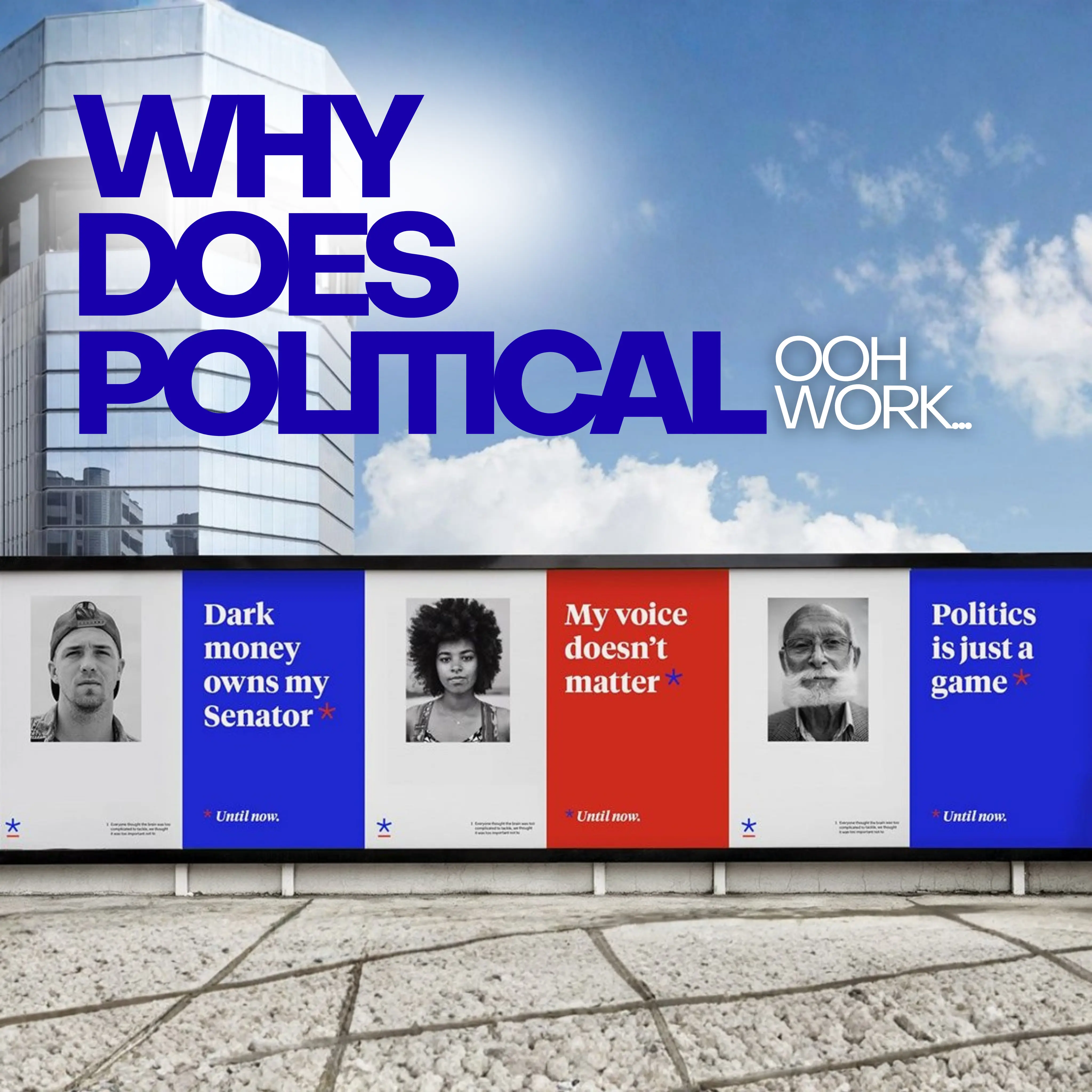
Why Political Campaigns Use OOH
Political campaigns need repeated visibility in the places voters actually move. Television, digital, mail, and canvassing all have roles, but OOH adds public presence. A billboard can make a candidate, issue, ballot measure, or voting deadline visible across a district every day.
Political billboard advertising is useful for candidate awareness, ballot initiatives, voter registration, early-vote reminders, local issue advocacy, and turnout pushes. It is especially valuable when the campaign needs to reach people across a defined geography rather than only online audiences.
Plan by Campaign Objective
| Objective | Best Placement Logic | Message Focus |
|---|---|---|
| Name recognition | District gateways, commuter corridors, high-frequency local routes | Candidate name, office, visual identity |
| Issue persuasion | Communities affected by the issue, relevant corridors, local landmarks | One issue, one position, one reason |
| Ballot initiative | High-turnout neighborhoods, voting access routes, citywide corridors | Measure number, yes/no position, vote date |
| Voter turnout | Early-voting sites, election office routes, transit corridors | Vote early, election date, polling reminder |
| Fundraising or volunteer push | Supporter-heavy neighborhoods and event corridors | Join, donate, volunteer, rally date |
Location Strategy for Voter Reach
The best political OOH plan starts with the district map. A campaign should identify voter density, turnout history, persuadable communities, early-voting locations, registration offices, commuter flows, and neighborhoods where the candidate or issue needs stronger recognition. Buying a board outside the district may produce impressions, but not necessarily useful voter contact.
Use BM Outdoor's billboard location guide to evaluate visibility, route direction, dwell time, and audience fit. In major markets such as Los Angeles, New York City, and Chicago, local route precision matters more than broad market visibility.
Creative Rules for Political Billboards
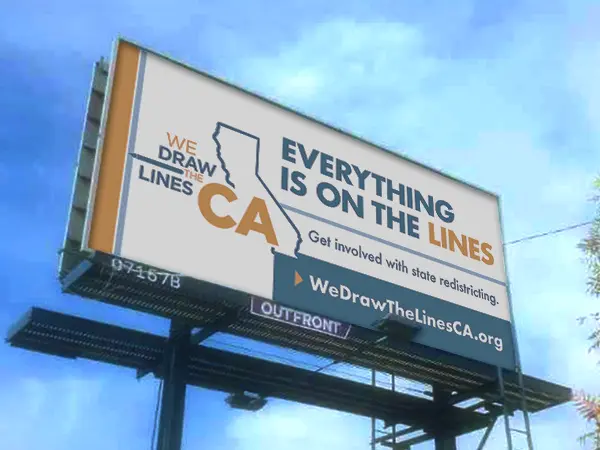
Political creative must be extremely simple. Voters should understand the name, office or issue, and action within seconds. Long policy explanations, multiple endorsements, dense disclaimers, and crowded sponsor logos can make the board unreadable. A better approach is one message per board.
Examples include "Vote Yes on Measure 4", "Maria Lopez for Mayor", "Early Voting Starts October 21", or "Protect Local Schools - Vote Tuesday." If a disclaimer is legally required, design around it from the start instead of adding it as an unreadable afterthought.
Phase the Message by Election Calendar
A political OOH campaign should change as the calendar changes. Early in the race, the board may focus on name recognition and office. During persuasion windows, the message may shift to a single issue or contrast. Near registration, early voting, and election day, the message should become more action-oriented.
This is where OOH works well with field, mail, and digital. The billboard creates public repetition, while other channels carry longer explanations, donation asks, canvassing scripts, or issue detail.
Digital vs Static for Campaigns
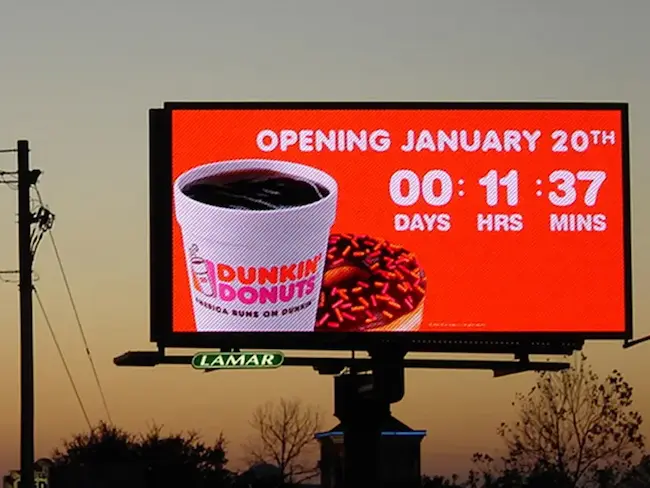
Digital billboards can support fast-changing political timelines: registration deadlines, early-vote countdowns, debate reminders, rally announcements, and final-week turnout. Static boards can build sustained name recognition over a longer period. Review BM Outdoor's digital vs static billboard guide before choosing format mix.
Measurement and Reporting
Political OOH should be measured by coverage and campaign impact signals. Track district reach, placement map, frequency, website visits, branded search, QR scans on pedestrian formats, volunteer signups, donation activity, rally attendance, and polling or turnout indicators where available. OOH rarely works as a last-click channel, but it can reinforce recognition and action across the campaign calendar.
For broader planning, use BM Outdoor's billboard ROI measurement guide. For budget inputs, review the billboard cost guide.
Common Political OOH Mistakes
The biggest mistake is buying media outside the useful voter geography. Another is trying to fit a full campaign platform on one board. Political OOH is a reminder and recognition channel; it should make one idea unavoidable, not explain every policy position.
Campaigns should also confirm approval timelines early. Political creative may require review by media owners, legal teams, campaign committees, and compliance advisors before it can run.
BM Outdoor Takeaway
Political OOH works when it is district-specific, legally reviewed, and simple enough to read at speed. To plan a campaign, use the BM Outdoor quote form and include the district, campaign dates, message type, compliance requirements, and target voter geography.
Frequently Asked Questions
Yes. Billboards can build name recognition, support ballot initiatives, remind voters of election dates, and reinforce campaign messages in specific districts or communities.
Prioritize district corridors, commuter routes, early-voting access roads, community gateways, high-turnout neighborhoods, and routes near campaign-relevant issue areas.
Use one clear message: candidate name, office, issue position, vote date, early voting reminder, ballot measure number, or a simple call to action.
Yes, subject to inventory rules and market availability. Digital boards can support countdowns, early-vote reminders, issue rotations, and rapid message changes.
Awareness campaigns often start weeks or months before voting, while turnout and reminder campaigns usually intensify closer to registration, early voting, and election dates.
Track district coverage, reach, frequency, branded search, website visits, QR scans on pedestrian media, volunteer or donation activity, and polling or turnout signals where available.
Political advertising may require paid-for-by disclosures or other legal language depending on jurisdiction and campaign type. Campaigns should confirm requirements before launch.
Ready to advertise outdoors?
BM Outdoor plans, buys and prints OOH campaigns across all 50 states. Request a free quote with no commitment.



Comments
Be the first to comment.