
Why NYC Subway Advertising Matters
New York is a movement-driven market. People commute through stations, transfer between lines, walk to work, meet friends, shop, attend events, and travel between neighborhoods every day. NYC subway advertising puts a brand inside those routines. It can create repeated exposure at a platform, a corridor, a station entrance, a transfer point, or a destination area where the audience has time to notice more than a roadside message.
The advantage is not simply a large transit system. It is the ability to connect a campaign to a real journey. A healthcare provider can focus on stations near clinics and residential catchments. A show can reach people on approaches to theater districts. A retailer can build recognition around shopping areas. A university can use the routes that prospective students and families already take. The media becomes more valuable when the audience movement is specific.
Start with the campaign job: broad New York awareness, neighborhood frequency, a new opening, ticket sales, a public message, an app, or a local service. That job determines the stations, formats, timing, and measurement plan.
Subway Formats to Compare
| Format | Best Use | Planning Question |
|---|---|---|
| Station posters and panels | Repeated commuter visibility and neighborhood awareness | Does the station serve the audience's normal route or destination? |
| Platform media | Waiting-time exposure and clear brand recall | How long are riders likely to wait and where is the panel positioned? |
| Mezzanine, corridor, and turnstile placements | High footfall and transfer-area frequency | Is the message visible during natural walking flow without obstruction? |
| Digital station screens | Date-sensitive messaging, creative rotation, event reminders | What are the operating hours, loop details, and approved specifications? |
| Station domination or multi-unit presence | Launches, entertainment, major brand moments | Does the station have strategic meaning beyond its total traffic? |
| Train-related inventory | Commuter frequency across selected lines or routes | Which rider pattern and line coverage are actually included? |
Plan by Journey, Not by a Station Ranking
A station with impressive system traffic can still be the wrong buy. The audience may pass through quickly, transfer to somewhere unrelated, or live outside the business's service area. A smaller but better-aligned station may deliver more useful repetition. Map the origin, transfer, destination, and decision point before reviewing inventory.
For a consumer launch, consider where customers discover, compare, shop, or attend. For a B2B campaign, look at commuter flows into business districts. For an event, identify neighborhood approaches, rail connections, and the period when ticket decisions are still being made. For a local service, keep the plan inside the actual service radius rather than trying to cover every borough.
NYC subway media can also work alongside a broader New York OOH campaign. A roadside billboard can build reach on vehicle corridors while station media supplies repeated urban exposure. The formats should solve different coverage problems, not duplicate each other without a reason.
Match the Message to Dwell Time
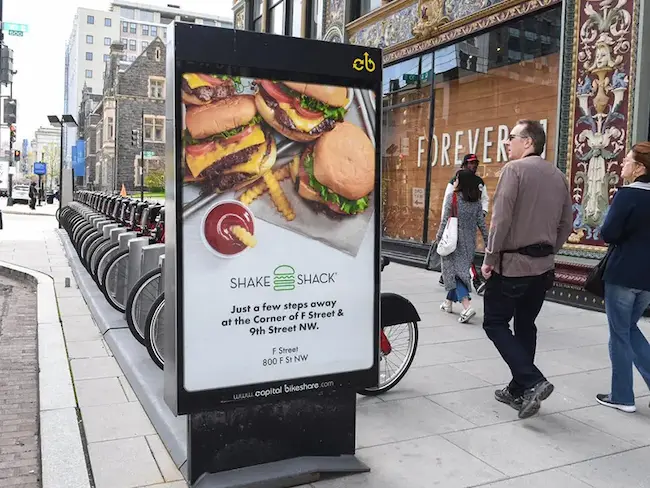
Subway advertising is often seen by people who are walking, waiting, or standing on a platform. That can support more context than a highway board, but it does not justify dense copy. A rider should understand the brand and central idea in a moment. Any additional detail should reward the person who has time to look again.
- Use one headline: a product, benefit, date, offer, or action, not a full campaign brief.
- Make the brand easy to recognize: subway audiences may see multiple messages during one trip.
- Use station context carefully: a neighborhood or venue cue can help when it makes the message more relevant.
- Choose one action: search, visit, book, attend, or download; avoid competing calls to action.
- Design for the real panel: preview the artwork at the intended viewing distance and in the supplied dimensions.
For the underlying legibility rules, use BM Outdoor's billboard design guide. The goal is the same across formats: the message must survive a fast, distracted viewing environment.
Useful Station Strategies
| Campaign Need | Station Strategy | Message Direction |
|---|---|---|
| Neighborhood business | Stations feeding the local trade area and nearby walking routes | Business category, neighborhood cue, easy-to-remember name |
| Entertainment or ticketing | Venue approaches, transfer corridors, entertainment districts | Date, title, venue cue, simple urgency |
| Retail opening | Shopping districts, nearby residential routes, key pedestrian approaches | Opening moment, location cue, recognizable product image |
| Healthcare or appointments | Clinic areas, residential catchments, routes used by caregivers | Service, trusted brand cue, booking or search action |
| Citywide awareness | A deliberate mix of business, residential, and cultural hubs | One consistent brand promise across every unit |
Compare Proposals on the Same Terms
Subway proposals are difficult to compare when one option describes a broad station package and another names individual locations. Ask every media partner for the same core information: exact stations or line coverage, unit count, placement type, dates, operating hours for digital formats, creative specifications, production deadlines, delivery methodology, and make-good treatment when inventory is unavailable.
Do not compare a single platform unit with a multi-station digital rotation as if they are the same product. The value depends on the audience, visibility, dwell time, frequency, and geographic role of the unit. It also depends on whether the campaign needs a fixed presence, a flexible message, or broad system visibility.
Rates vary by format, station, availability, season, production, and campaign duration. For general planning context, review BM Outdoor's billboard cost guide, then request current transit-specific availability and pricing for the exact New York coverage you need.
Measure What the Campaign Is Supposed to Change
Delivery reports confirm that a campaign was installed or played. The business measurement should go further. A local campaign can track branded search, direction requests, calls, appointments, store traffic, or a dedicated landing page. An event can track ticketing activity and date-specific traffic. A brand campaign can measure search lift, direct traffic, market surveys, or comparison with an unexposed market when practical.
Set that scorecard before the buy begins. It helps choose the right call to action and prevents a campaign from being judged only by media delivery. BM Outdoor's OOH ROI measurement guide explains how to align an OOH objective with a response signal.
Build an NYC Subway Media Brief
A useful brief includes the target audience, neighborhoods or destinations, campaign dates, business goal, priority stations or routes, creative assets, and the action you want people to take. BM Outdoor can help evaluate transit options alongside other New York formats and build a plan around actual audience movement. Request an NYC subway advertising quote to review current availability for your campaign.
Frequently Asked Questions
NYC subway advertising is out-of-home media placed in subway stations and related transit environments. Formats can include posters, digital screens, platform media, turnstile and corridor placements, station dominations, and train-related inventory, subject to current availability and operating rules.
Start with the audience destination and route: neighborhoods, office districts, campuses, shopping areas, clinics, event venues, and transfer points. A station with the right audience and repeat exposure can be more useful than a larger station outside the campaign geography.
Yes. Plans can combine stations serving hotels, airports or rail connections, major attractions, retail districts, and entertainment areas with commuter-heavy stations. The station mix should reflect the visitor journey and the action the campaign needs.
Station media can support slightly more detail than a roadside billboard because people may be walking or waiting, but the main message still needs to be understood immediately. Use a clear brand cue, a single idea, strong contrast, and one simple action.
Timing depends on audience frequency, the campaign objective, format availability, seasonality, and whether the message is tied to an event or opening. A campaign should run long enough for the selected audience to encounter it repeatedly on the relevant routes.
Measurement can include delivery reporting, branded search, direct traffic, dedicated landing pages, QR scans where the environment supports them, offer codes, ticket sales, store visits, appointment requests, and before-and-after market trends.
No. A roadside billboard is designed for vehicle visibility and corridor reach, while subway media can deliver repeated pedestrian and commuter exposure inside a transit network. Many New York campaigns use both when they need broad visibility plus station-level frequency.
Ready to advertise outdoors?
BM Outdoor plans, buys and prints OOH campaigns across all 50 states. Request a free quote with no commitment.




Comments
Be the first to comment.