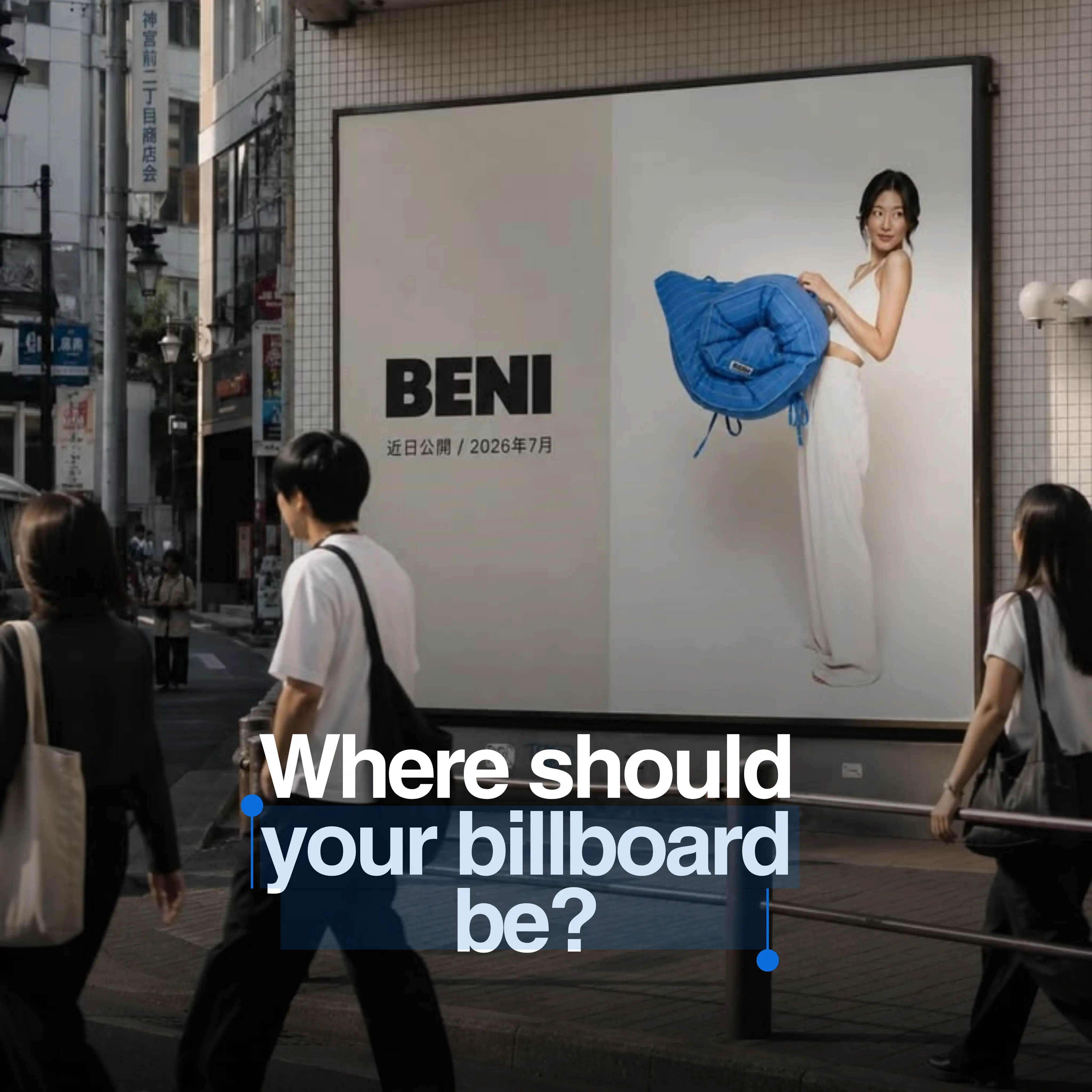
Why Location Quality Matters More Than Raw Traffic
Many advertisers start by asking for the highest-traffic billboard in a market. That is understandable, but it can lead to poor buying decisions. A board with high traffic can underperform if drivers cannot see it early enough, if the angle is weak, if the route does not feed the business, or if the audience does not match the campaign.
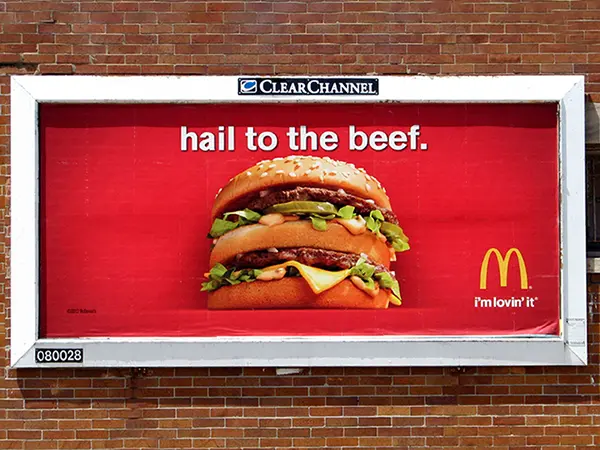
Good billboard planning is not about buying the biggest number. It is about buying the right exposure. A healthcare clinic, restaurant, real estate development, and national brand may all need different sites in the same city.
The Billboard Site Selection Checklist
| Factor | What to Check | Why It Matters |
|---|---|---|
| Visibility | Approach distance, angle, obstructions, lighting | The audience must have enough time to read |
| Traffic quality | Volume, direction, commuter pattern, local routes | Not all impressions have equal value |
| Audience fit | Income, behavior, workplace, neighborhood, destination | The message needs relevant people |
| Proximity | Distance to store, development, clinic, event, or market | Closer can improve action for local campaigns |
| Dwell time | Speed, congestion, intersections, merges | More read time supports stronger recall |
| Competitive context | Nearby boards, category competitors, visual clutter | Clutter can reduce impact |
Visibility and Read Time
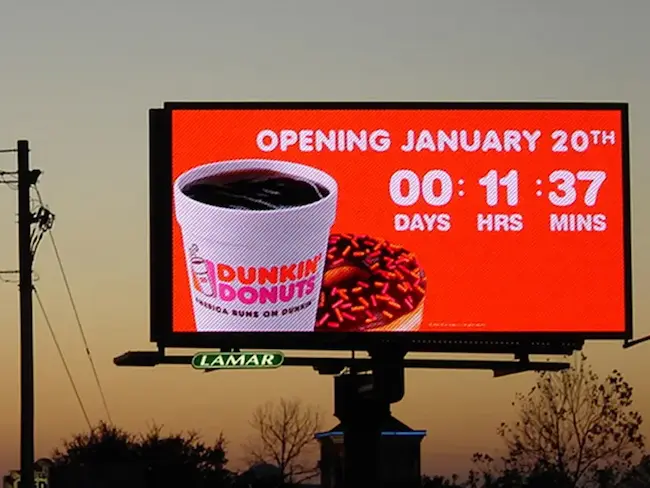
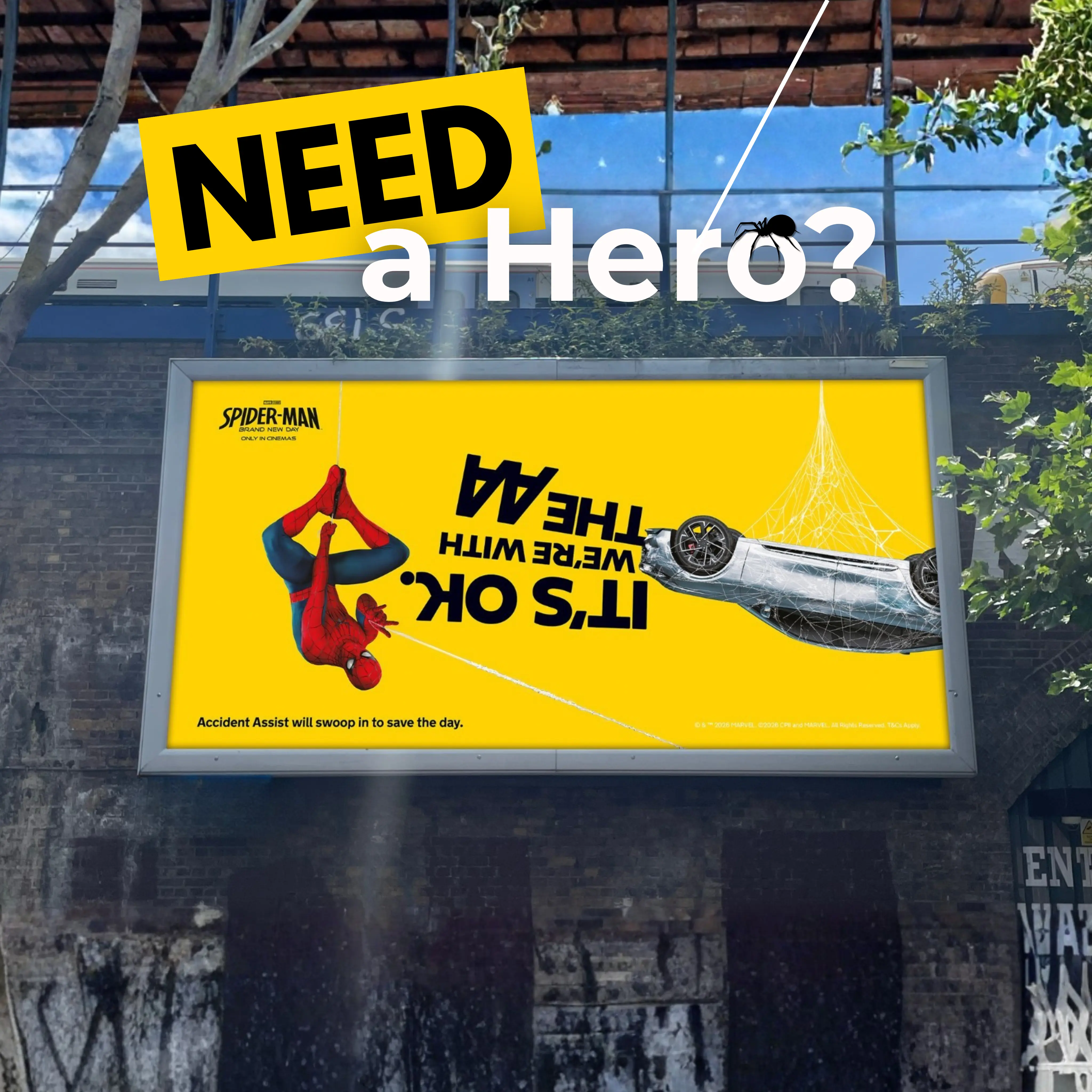
A billboard needs clean sight lines. Trees, poles, bridges, curves, buildings, and competing signs can reduce performance even when traffic counts look strong. The best boards give drivers enough approach time to notice the brand, understand the message, and remember the action.
Read time is why simple creative matters. A billboard with a strong location but overloaded copy still fails. If the site is fast-moving, the message must be even shorter. If the site has slower traffic or a long approach, the creative can carry slightly more information, but restraint still wins.
Audience Fit Beats Generic Reach
Audience fit is the difference between exposure and useful exposure. A board near a premium shopping district may be valuable for luxury retail, real estate, finance, or healthcare, but less useful for a discount lunch offer. A commuter board near an industrial corridor may be excellent for QSR, staffing, auto service, or trade schools. The audience context should match the advertiser's business model.
For local advertisers, customer ZIP codes, store data, CRM records, and sales territory maps can help prioritize routes. For national advertisers, market-level demographics, traffic patterns, and media quality may matter more.
Route Direction and Moment of Decision
Direction matters. A restaurant may want traffic heading toward lunch destinations. A real estate development may want commuters driving toward a growth corridor. A healthcare provider may want neighborhood routes near clinics, pharmacies, and hospitals. A brand awareness campaign may value both inbound and outbound traffic if the goal is repeated market presence.
Think about when the audience can act. A board after the relevant exit may be too late for immediate response. A board before a decision point can be stronger even if its traffic count is lower.
Proximity by Category
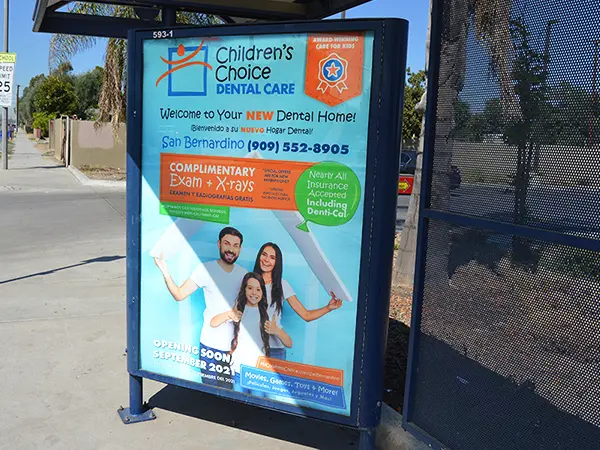
Local businesses usually need tighter coverage. Restaurants, urgent care centers, gyms, dental offices, salons, and service franchises often benefit from boards within the trade area. Real estate developments may need routes from employment centers, suburbs, schools, and retail corridors. National brands may care less about exact proximity and more about premium visibility, market coverage, and frequency.
For industry examples, see BM Outdoor's guides for restaurant billboard advertising, real estate OOH, and healthcare and pharma billboard advertising.
One Dominant Site vs a Network
Some campaigns need one landmark board. Others need several placements that create coverage across a trade area. A luxury brand may prefer one premium, iconic location. A franchise launch may need multiple boards around a new unit. A political or public awareness campaign may need broad coverage across commuting routes.
The decision should follow the goal. If the goal is local action, coverage near the action matters. If the goal is market awareness, repeated exposure across major routes may matter more.
Ask for Photos, Maps, and Context
Before approving a location, ask for current photos, map position, facing direction, traffic context, and any available audience or impression information. If possible, review the board in street view or ask for approach photos. A location can look strong in a spreadsheet and weak from the driver's perspective.
Also ask what else is nearby. A board surrounded by visual clutter may need simpler creative. A board near a competitor may be strategically useful. A board close to a landmark may be easier for the audience to remember.
Market Examples
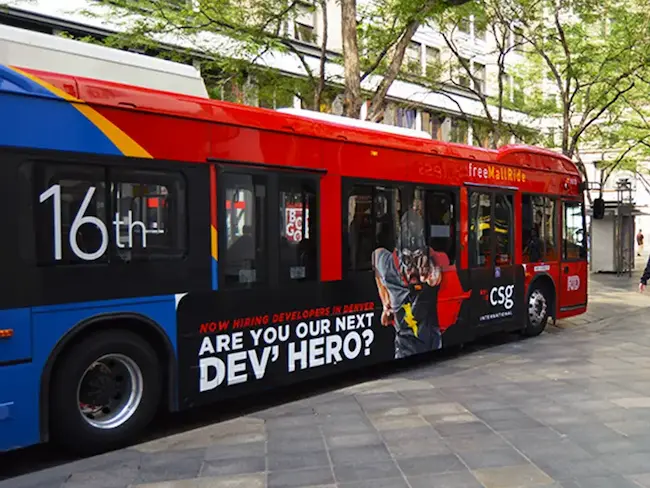
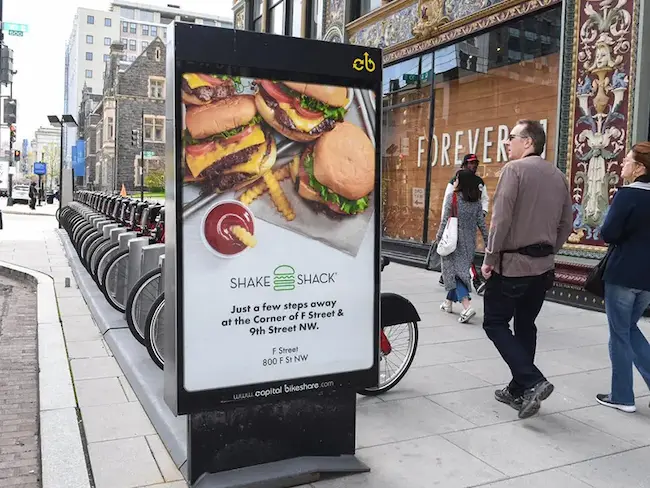
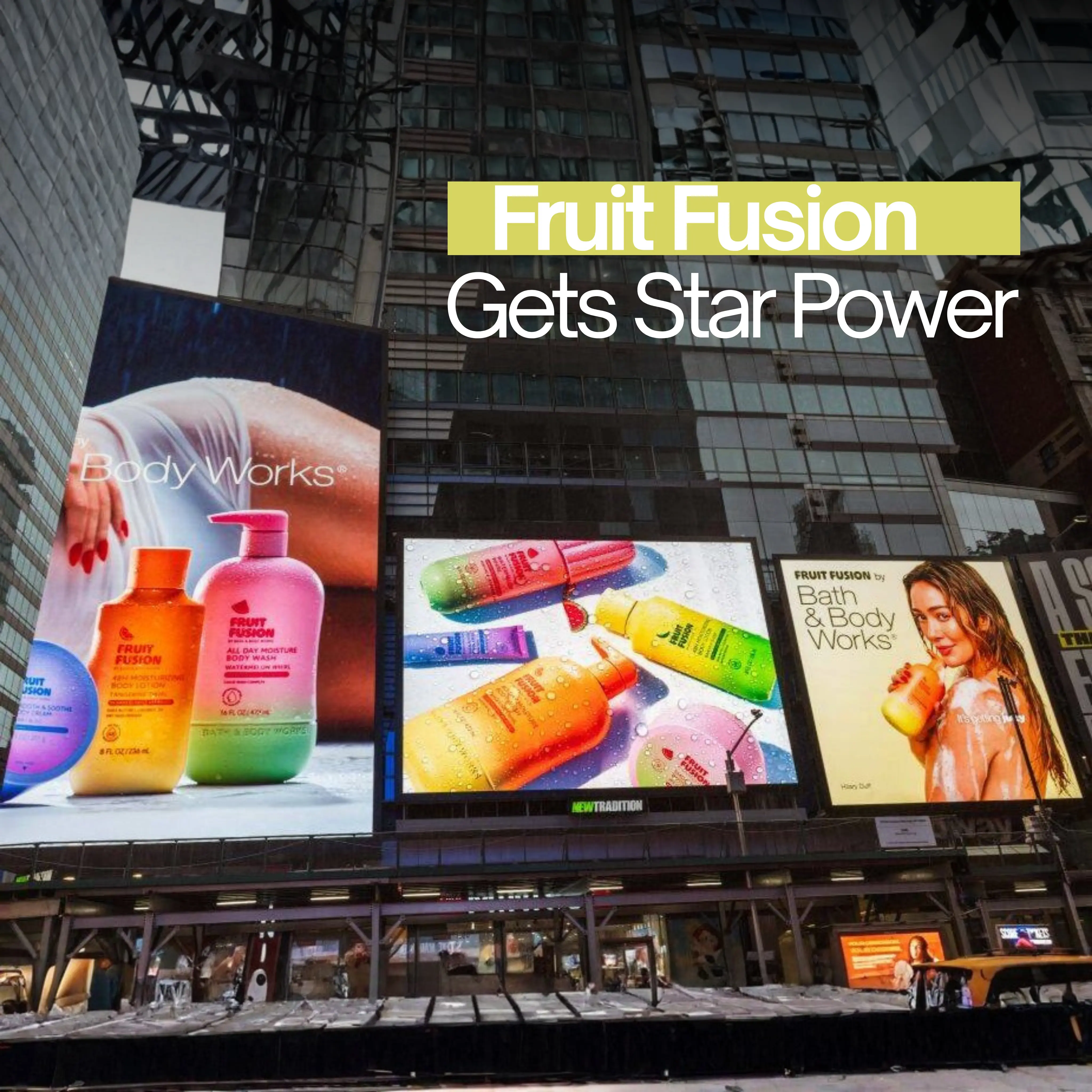
In Los Angeles, neighborhood and route selection can be more important than citywide reach because traffic patterns vary heavily by corridor. In New York City, pedestrian, transit, and high-dwell formats may compete with traditional roadside boards. In Chicago and Dallas-Fort Worth, commuter corridors and neighborhood trade areas can create very different buying strategies.
Cost and Site Quality
A cheaper board is not always efficient, and a premium board is not always necessary. The right comparison is cost relative to useful exposure. For pricing context, use BM Outdoor's How Much Do Billboards Cost guide, then evaluate specific locations against the campaign objective.
BM Outdoor Takeaway
The best billboard locations combine traffic, visibility, audience fit, route direction, dwell time, and proximity to action. To compare real locations in your market, use the BM Outdoor quote form and include your city, audience, business location, campaign goal, and target launch date.
Frequently Asked Questions
A good billboard location has strong visibility, relevant traffic, enough read time, clean sight lines, audience fit, and a route that supports the advertiser's desired action.
No. A high-traffic board can be weak if the audience is wrong, the angle is poor, the message is hard to read, or the route does not connect to the business goal.
It depends on the category. Restaurants and local services often need close trade-area coverage, while healthcare, real estate, events, and destination businesses may use wider corridors.
Dwell time is the amount of time the audience can see and process the billboard. Slower traffic, intersections, congestion, and long approaches can improve read time.
It depends on the goal. Inbound routes may support store visits or events, while outbound routes may support homebound decisions, brand memory, or future search.
Buy enough coverage to match the market and goal. Some campaigns need one dominant site, while others need a network of boards across a trade area or commuter pattern.
Compare traffic, visibility, audience, proximity, route direction, competitive clutter, creative fit, and price. The best location is the one that supports the campaign objective.
Ready to advertise outdoors?
BM Outdoor plans, buys and prints OOH campaigns across all 50 states. Request a free quote with no commitment.









Comments
Be the first to comment.