
What does it mean to be a cat person? For Smalls, the answer goes far beyond owning a feline companion.
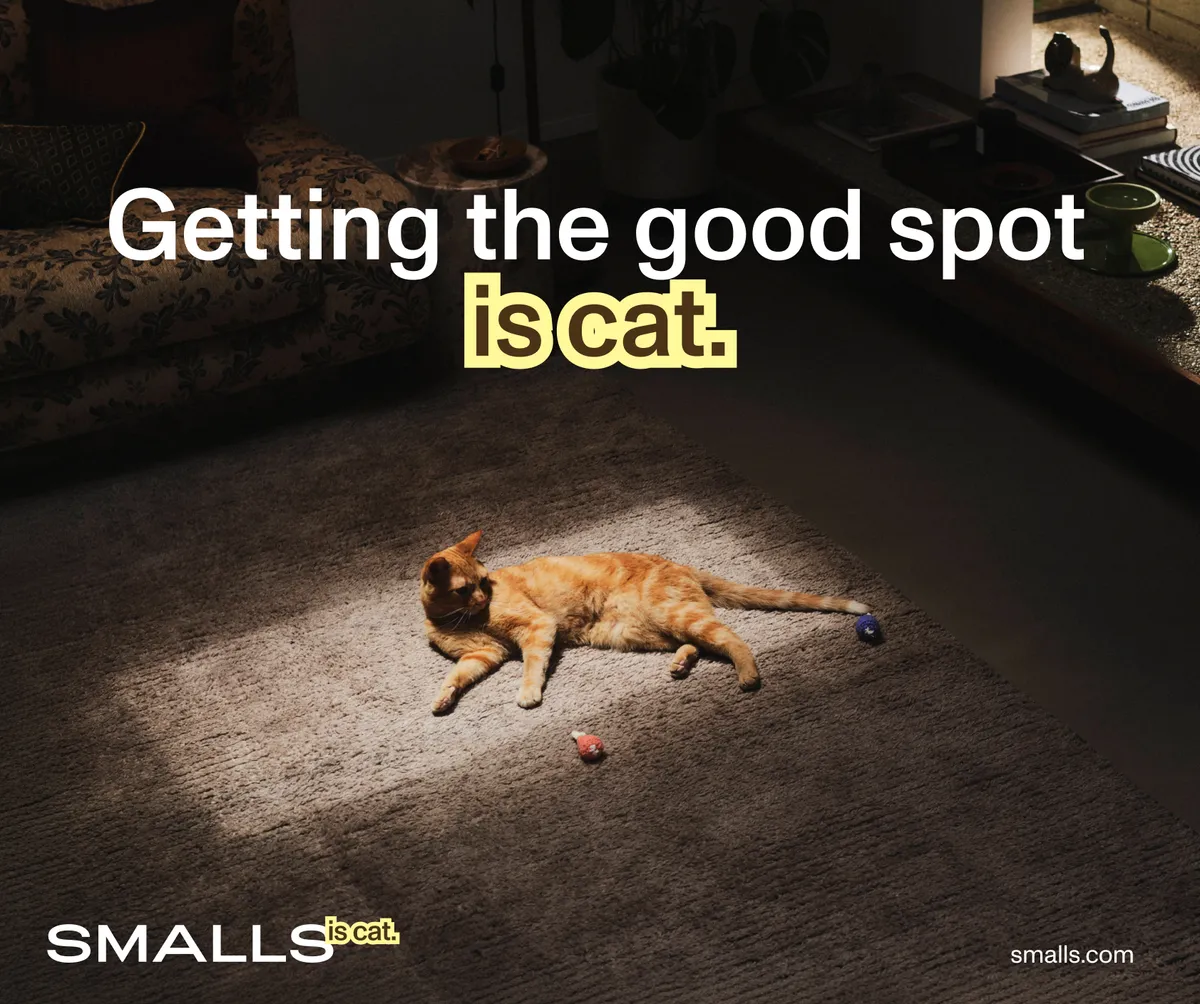
The New York-based cat food brand has launched its largest campaign to date, presenting cat as a state of mind rather than simply an animal. Through its new Is Cat campaign, Smalls is exploring the attitudes, behaviors and cultural references that define modern cat people.
Instead of relying on traditional pet food advertising, the campaign uses a flexible creative language that can adapt to different messages, locations and formats.
The result is a campaign that combines humor, cultural observation and outdoor advertising to bring the personality of cats and the people who love them into the streets of New York.
What Does It Mean To Be Cat?
Developed in-house by Smalls in partnership with production company Chico Studio and photographer Paul Yem, Is Cat is built around a simple but adaptable idea.
The campaign uses the phrase "___ is cat" as a starting point. By changing the words that fill the blank, Smalls creates a series of statements that connect everyday experiences with the personality traits commonly associated with cats.
Some messages are thoughtful, such as "Solitude is cat" and "Read receipts is cat." Others are more playful and unexpected, including "A dirty martini is cat" and "Irish exiting is cat."
Each statement presents a different interpretation of feline culture. Together, they create a broader identity around being independent, selective, quietly confident and unapologetically yourself.
Rather than explaining what a cat is, the campaign invites audiences to recognize the qualities they associate with cats and perhaps see those qualities in themselves.

A Different Approach To Pet Food Advertising
Pet food campaigns often focus on nutrition, product benefits or emotional relationships between owners and their pets. Smalls takes a different approach by placing cultural identity at the center of its communication.
The campaign does not depend on a single tagline or one specific visual concept. Instead, it creates a system that can respond to different situations, audiences and environments.
This flexibility allows the brand to move beyond familiar pet advertising conventions. Cat ownership becomes a way of expressing personality, taste and behavior.
That approach is particularly relevant for a brand like Smalls, which has positioned itself around the modern cat lifestyle and the idea of providing human-grade nutrition since its launch in 2017.
By connecting its product category with a wider cultural conversation, the brand can communicate with cat owners through humor, recognition and shared experiences.
Bringing Is Cat Into The Streets Of New York
The campaign is running across New York throughout September, using a combination of physical advertising formats to establish a visible presence across the city.
Its outdoor execution includes hand-painted murals, billboards and wheatpaste installations, giving the campaign different ways to appear within the urban environment.
These formats allow the "___ is cat" concept to adapt to different locations while maintaining a recognizable visual and verbal identity.
A billboard can deliver a quick, humorous statement. A mural can become part of a neighborhood's visual landscape. A wheatpaste installation can add a more informal and culturally relevant presence to the streets.
Although each execution may feature a different message, they all contribute to the same larger idea: cat is not just a species. It is an attitude.
Some of the outdoor activity will continue into October, extending the campaign's presence beyond its initial September launch.
From Outdoor Advertising To An Art Experience
Smalls is also extending the Is Cat campaign beyond traditional outdoor advertising with a one-night-only exhibition in New York.
The event will be hosted by artist and cat parent Chloe Wise, bringing the campaign's creative work into an environment where the messages can be experienced as art pieces and interactive elements.
This expansion gives the campaign another dimension. The creative is not limited to advertising surfaces; it can also become something people visit, explore and discuss.
The exhibition reinforces the campaign's connection to contemporary culture while creating a more direct experience between the brand and its audience.
It also demonstrates how a strong creative platform can travel across different environments without losing its central idea.
A Growing Audience Of Cat Owners
Smalls' campaign arrives at a time when the cat-owning audience represents a significant opportunity for the pet food industry.
According to research cited by the brand, the number of households with cats in the United States increased from approximately 27 million in 1996 to 49 million in 2025.
That growth represents more than an expanding customer base. It also reflects an opportunity for brands to better understand the cultural habits, preferences and identities of cat owners.
Smalls approaches this audience by recognizing that cat people are not a single, uniform group. They may share an appreciation for independence, humor and individuality, but those traits can appear in many different ways.
The Is Cat campaign uses that diversity as a creative advantage, allowing different messages to speak to different aspects of the audience.

Want To Turn Your Idea Into A Real-World Campaign?
Creative outdoor advertising can take many forms. Murals, billboards, wheatpaste installations, experiential activations and unconventional placements can all be developed around a brand's objectives, audience and location.
BM Outdoor helps brands bring ambitious outdoor advertising ideas to life. Whether you want to create a large-scale installation, transform an urban space, launch an experiential activation or build a high-impact OOH campaign, our team can help turn the concept into a real-world experience.
Have an idea for your next campaign? Talk to BM Outdoor and explore how your brand can make an impact beyond the screen.
Final Thought
Smalls' Is Cat campaign demonstrates how a brand can turn a simple word into a distinctive cultural statement.
By combining humor, flexible messaging and a coordinated mix of outdoor advertising and experiential activity, the campaign presents cat ownership as an attitude rather than a category.
For brands looking to create more memorable OOH campaigns, the idea is a useful reminder that strong creative does not always require a complicated message. Sometimes, a simple concept with room to evolve can make the biggest impact.
Ready to advertise outdoors?
BM Outdoor plans, buys and prints OOH campaigns across all 50 states. Request a free quote with no commitment.








Comments
Be the first to comment.